The most powerful story you’ll ever hear is the one you tell about yourself.
We spend our lives telling ourselves stories. Some are inherited, some are created through painful experiences, some are repeated so often that they begin to feel like objective truth.
“I’m not enough.”
“I’m too much.”
“I always end up abandoned.”
“I’ve missed my chance.”
“I’m broken.”
These stories become identities. We stop noticing that they are stories at all. But what if there was another way of understanding your life? What if, instead of viewing yourself as a collection of problems to solve, you began seeing yourself as the heroine of an unfolding myth?
Not because your life is fantasy, but because myths across time, place, and culture have always helped human beings make sense of transformation.
We are all storytellers, all the time
Our minds are constantly meaning-making through narrative: sifting through information through the Reticular Activating System (RAS), a bundle of nerves at the base of the brain, which acts as your inner storyteller filtering millions of sensory bits every second. Modern psychology now speaks of narrative identity: the idea that we understand ourselves through the stories we tell about our lives.
Long before psychology textbooks and self-help books, human beings purposefully gathered around fires to tell stories. Stories helped us understand grief, love, death, initiation, failure, courage, loss…. Stories carried wisdom across generations. They reminded us that suffering was rarely meaningless, and that every descent carried within it the possibility of return.
The question is not whether you have a story already going on in your subconscious mind. The question is: Is the story you’re living helping you grow?
Myth is not escapism
When people hear the word myth, they often think of fiction. Something ancient, unreal, fantastical: The Odyssey, The Sword in the Stone, Thor and Ragnarök, Pandora’s box…. But myths have never been merely entertainment; they are symbolic maps of the human psyche.
Across cultures and centuries, myths have explored remarkably similar questions: Who am I? Why am I suffering? What am I here to learn and to become? How can I improve my circumstances? How do I find my way home?
Carl Jung believed these recurring patterns reflected universal structures within the unconscious mind. He called the recurring characters within mythological structures archetypes: The Hero. The Mother. The Trickster. The Sage. The Mystic. The Wanderer. These are not characters “out there.” They are living psychological energies that move within each of us: just as we inhabit myth and story whether we notice it or not, throughout our lives we inhabit many different archetypes, often without realising it.
Why myth changes us
One of the greatest gifts my PhD and book research into historically-responsive storytelling gave me was not simply a deeper understanding of theatre, spirituality, or ritual. It changed how I understand human transformation.
While researching ritual theatre and the communal origins of storytelling, I became fascinated by how ancient performance traditions were never separate from healing, spirituality, psychology, or community. Performance wasn’t simply something people watched. It was something people entered. People sang, moved, danced, spoke, embodied symbols and stock figures, stepped into stories, crossed thresholds, underwent catharsis, and returned changed.
Those ancient practices recognised something we are only beginning to articulate again: which is that transformation happens not only through thinking differently, it happens through embodying different possibilities.
Since completing my doctorate and publishing my book, I have continued exploring this intersection between creativity, ritual, psychology, embodiment and wellbeing, bringing together research from expressive arts, somatics, neuroscience, depth psychology and anthropology.
This eventually became the foundation of Somatic Mythwork™.
Why stories matter to the nervous system
When we experience trauma, chronic stress, or repeated disappointment, our nervous system often learns protective patterns. We contract. Avoid. People-please. Hide. Overwork. Disconnect from creativity. Lose touch with our voice.
These adaptations make sense. They helped us survive. But survival is not the same as living.
One of the remarkable things about creative practice is that it allows us to explore new possibilities without forcing change.
When we enter metaphor, when we work with symbols, when we write, paint, move, perform, or imagine… we begin relating to ourselves differently. We create distance from the old identity while gently rehearsing a new one.
Rather than asking, “What’s wrong with me?” we begin asking, “What journey am I on?” That shift changes everything: opening our minds to possibility, instead of closing them down and narrowing our vision. Neuroscientifically, if we consistently start to shift our thinking in this direction, this actually changes the way our brains operate. Somatically, it can support our bodies and nervous systems in shifting into ventral vagal mode, where we can see the wider picture rather than operating primarily in tunnel vision, stress, and survival mode.
Mythologising yourself
So what do I mean by mythologising yourself?
I don’t mean pretending your life is perfect, or romanticising suffering, or bypassing difficult emotions. I mean learning to view your life through a wider symbolic lens. Instead of identifying entirely with the obstacle… you become curious about the transformation it might be asking of you.
Instead of asking: “Why does this always happen to me?” you might ask: “What chapter of my story am I living?”
Instead of: “I’m completely lost.” you might wonder: “Am I standing at a threshold?”
Instead of: “I’ve failed.” perhaps: “This is the descent before the return.”
The events themselves may not change, but your relationship to them does; and when our perspective shifts, this opens up a whole new way of experiencing our day to day life.
How to begin
You don’t need to know Greek mythology or read Jung to begin. Start simply. Ask yourself:
What season of my life am I in?
Which archetype feels most alive in me right now?
What qualities is life inviting me to develop?
If my life were a novel, what chapter would this be?
Who am I becoming?
You might find yourself recognising parts of yourself in different moments: The Lost Girl. The Wanderess. The Martyr. The Artist. The Sovereign. The Mother. The Shapeshifter.
These archetypes (and many more) are ways of understanding the different parts of yourself with greater compassion and curiosity.
Embody the story
This is where Somatic Mythwork™ differs from simply reading about archetypes. Insight alone rarely transforms us: our bodies also need to experience change. Through movement, voice, creativity, ritual, breath, art, storytelling, symbol, community.
Embodiment allows us to stop merely imagining a different life… and begin inhabiting it. Because ultimately, transformation isn’t about becoming someone else. It’s about remembering the fuller version of who you’ve always been.
Your story is still being written
One of the useful things to note when we are thinking about myths and how a mythological structure relates to our lives is that the heroine never knows she’s halfway through the story. When she enters the forest… she believes she’s lost. When everything falls apart… she believes it’s the end of the dream. Only later does she realise it was an initiation.
Perhaps the same is true for you. Perhaps the chapter you’re living right now isn’t evidence that you’ve failed, perhaps it’s the beginning of the story you’ve been waiting to live.
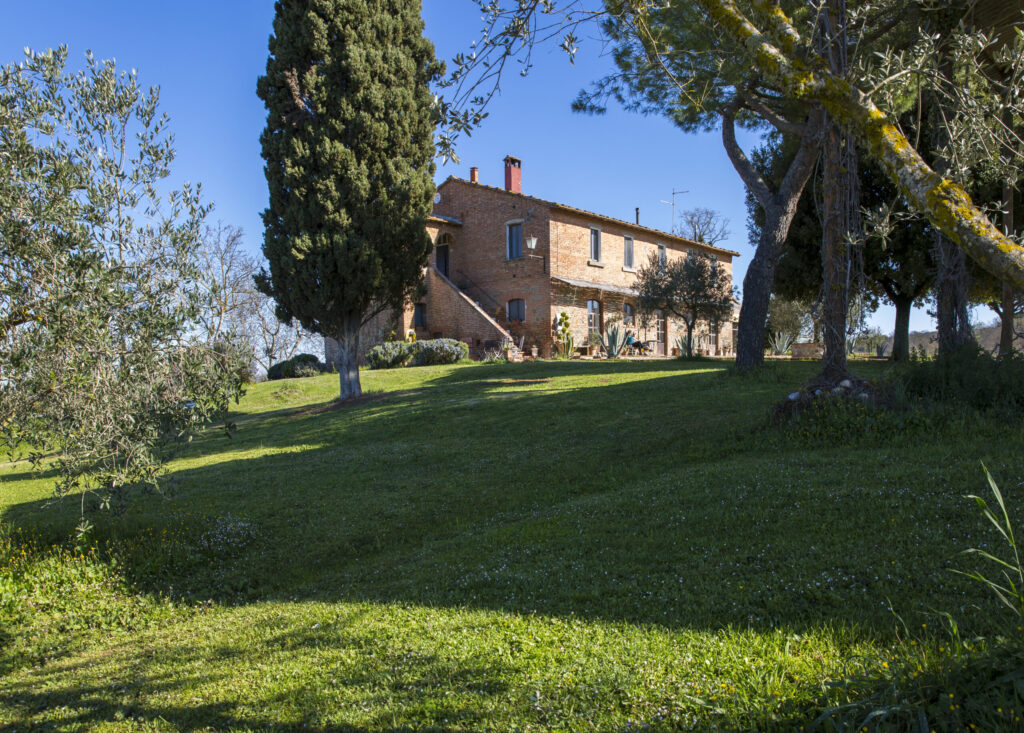
This October, we’ll be exploring exactly this on The Mystic’s Path in Umbria, Italy.
Together we’ll walk in the footsteps of extraordinary women mystics who found creative ways to express themselves, cultivate relationships with the divine, and challenge the expectations placed upon them.
Through Somatic Mythwork™, storytelling, archetypes, ritual, expressive arts, Jungian psychology, and trauma-informed embodiment practices, we’ll explore not only their stories… but the one you are being invited to write next.
If you fancy joining us in Umbria this October, and for the 6-month archetypal & mythological journey after that, or on another retreat membership soon, click below and book a discovery call to meet and chat 💛